
 For Your Home
  For Your Business
  Other Services
 Choosing the Right Propane Tank Size

Choosing the right propane tank is not only about finding a tank that fits on your property. The right setup also depends on how you use propane, the appliances and equipment connected to your system, seasonal demand and your distance from the facilities.
Most residential propane setups consist of a tank size ranging from 120 to 500 gallons, while larger homes, businesses, farms and other high-usage properties may require a 1,000-gallon tank or manifolded propane cylinders.
This guide explains the main factors to consider and how common propane tank sizes are typically used. A Superior Plus Propane representative can assess your property, understand how you use propane and recommend a tank setup that supports your current and future needs.
What Determines the Right Propane Tank Size?
The right propane tank size depends on:
- Home or building size
- Number and type of propane appliances or equipment
- Forecasted volume usage
- Climate and seasonal temperatures
- Available space and installation requirements
A home that uses propane only for a fireplace or water heater may need a different setup than a home that relies on propane for full-home heating, cooking, water heating and a backup generator.
Tank size should therefore be based on the property’s total propane demand rather than one appliance or home size alone.
Common Propane Tank Sizes at a Glance
The following overview shows how common propane tank sizes are generally used. Propane tanks are typically filled up to 80% of their total capacity to allow for gas expansion; the chart reflects usable capacity rather than total tank size. Exact recommendations may vary based on the property, outdoor temperatures, connected appliances and local installation requirements.
| Tank Size | Capacity (Gallons) | Common Uses |
|---|---|---|
| 120-gallon tank | ~96 usable gallons | Individual appliances, cabins, seasonal properties and backup heat |
| 250-gallon tank | ~200 usable gallons | Partial home heating and multiple propane appliances |
| 325-gallon tank | ~260 usable gallons | Moderate whole-home heating and multiple propane appliances |
| 500-gallon tank | ~400 usable gallons | Whole-home heating, water heating, cooking and other household propane uses |
| 1,000-gallon tank | ~800 usable gallons | Large homes, farms, businesses and properties with high propane demand |
For full tank dimensions, placement considerations and other specifications, visit our propane tanks and uses page.
How Home Size Affects Propane Tank Selection
Home size is a helpful starting point, but it should not be used as the only factor when selecting a propane tank.
A smaller home that uses propane for heating, hot water, cooking and a backup generator may consume more propane than a larger home that uses propane for only one or two appliances. Insulation, thermostat settings, local temperatures and the number of people in the home can also affect demand.
In general:
- Smaller homes with limited propane use may be suited to a 120- or 250-gallon tank.
- Mid-sized homes using propane for heating and several appliances may require a 325- or 500-gallon tank.
- Larger homes or properties with high heating and equipment demands may require a 500- or 1,000-gallon tank.
A site assessment from Superior Plus Propane can help determine which tank size and setup are appropriate for your home, appliances and expected propane usage.
How Appliances and Equipment Affect Tank Size
Each propane appliance or equipment adds to the total demand placed on the tank.
Common residential propane uses include:
- Furnaces and boilers
- Water heaters
- Stoves and ranges
- Fireplaces
- Clothes dryers
- Pool and spa heaters
- Space heaters
- Backup generators
Homes that use propane for several appliances or higher-demand equipment may require a larger tank or multiple connected tanks.
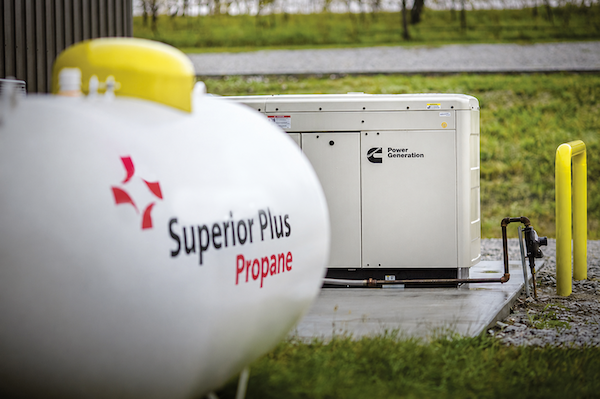
Backup generators are an important consideration because propane usage can increase significantly when a generator operates during an extended outage. Contact Superior Plus Propane before installing or upgrading a generator or other propane equipment so we can review your tank capacity and changes in consumption.
How Propane Tank Size and Usage Affect Delivery Frequency
Propane tank size and tank level are helpful indicators, but they do not tell the full story. Delivery frequency also depends on outdoor temperatures, home size, thermostat settings, home and appliance efficiency, the number of people in the home, and whether propane is used for a backup generator.
For example, a standard 500-gallon tank is commonly used for residential heating and multiple propane appliances. Depending on the home, local climate, and how propane is used, estimated delivery needs may look like this:
- High-usage home: Uses propane for full-home heating, water heating, and cooking. Larger homes or homes in colder weather may need 2 to 4 or more deliveries per year.
- Moderate-usage home: Uses propane for heating and some appliances. Depending on home size and usage, these homes may need 1 to 2 deliveries per year.
- Low-usage home: Uses propane mainly for a fireplace, space heater, or occasional appliance use. These homes may need one delivery per year.
The difference becomes clearer when comparing two households with the same tank size and tank level. Two neighbors may both have a 500-gallon tank at 30%, but they’re consuming propane at different rates resulting in the propane lasting longer in one home than the other. A larger household using propane for heating, hot water and cooking may consume propane more quickly than a smaller, more efficient household using fewer appliances.
This is why propane tank levels alone cannot determine exactly how long the remaining propane will last. It represents the amount in the tank, but not how quickly each household will use it.
When Multiple Propane Tanks May Be Needed
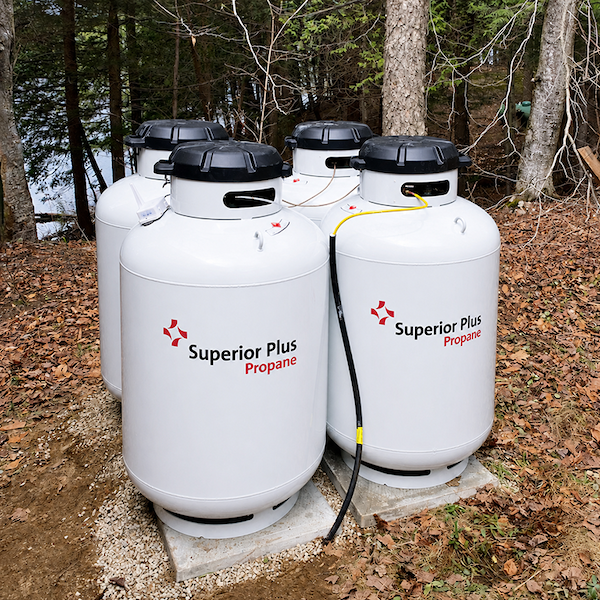
A larger propane tank may not always be practical because of space, access or installation requirements. In some situations, multiple propane cylinders can be connected to increase the total available capacity.
Manifolded propane cylinders may also be considered when:
- Space or access is limited: A larger tank may not physically fit on the property, or delivery and installation equipment may not be able to reach the desired location.
- Cold weather performance is a consideration: In colder climates, propane vaporizes more slowly. Manifolded cylinders can help support propane supply during high-demand periods.
- Property or code constraints apply: Setbacks, terrain, landscaping, homeowners’ association rules, or local requirements may make manifold cylinders easier to place than one larger tank.
- Future propane demand may increase: If additional propane appliances are added later, another cylinder may be added instead of replacing the existing tank setup.
The appropriate configuration depends on the property, propane demand and installation requirements. For businesses, farms and other high-demand applications, Superior Plus Propane can also help identify the right commercial propane tank solution.
Above Ground or Underground Propane Tanks
Tank size is only one part of choosing the right setup. Some larger propane tanks may be installed above ground or underground, depending on the property, local requirements, installation conditions and customer preference.
Above ground tanks are generally easier to access for installation, inspection and service. Underground tanks provide a more discreet appearance but typically require excavation and additional installation considerations.
Superior Plus Propane can evaluate available space, delivery access, service needs and site conditions to help you choose the right setup. In some cases, an underground tank may not be recommended due to factors such as flooding risk, high water tables or other property conditions. Learn more about the differences, benefits and installation considerations in our guide to underground propane tanks.
Questions to Consider Before Choosing a Propane Tank
Before selecting a propane tank, consider:
- Which appliances and equipment will use propane?
- Will propane provide primary or supplemental heating?
- Are you planning to add a generator, pool heater or other propane applications?
- Is the delivery location in a colder climate?
- Is there enough space for the tank and safe delivery access?
- Is the delivery location in a remote area with limited access, and if so, would a larger tank help reduce the frequency of deliveries?
- Could planned renovations or equipment upgrades increase demand?
Sharing this information with us helps our team recommend a setup that meets your current propane needs and accounts for future renovations, appliances or equipment.
Choosing the Right Propane Tank for Your Property
The best propane tank size depends on the complete picture: property size, connected appliances, heating requirements, seasonal demand, installation conditions and expected propane usage.
Choosing a tank that reflects your actual needs can support more convenient propane service and provide enough capacity for the appliances and equipment you rely on.
With local teams serving homes and businesses across the United States, Superior Plus Propane can assess your property, review your propane needs and recommend an appropriate tank setup.
Contact Superior Plus Propane to find the right propane tank solution for your home or business.
Propane Tank Size FAQs
The right size depends on your property, heating needs, appliances, equipment and propane usage. Many homes use a 250- to 500-gallon tank, but smaller or larger setups may be recommended depending on demand.
A 500-gallon tank is commonly used for whole-home heating and multiple propane appliances. However, the best tank size depends on how the household uses propane.
A larger tank can increase the amount of propane available between deliveries, but delivery frequency still depends on how quickly propane is used. Weather, heating demand, appliances and backup generator operation can all affect usage.
In some situations, multiple tanks or cylinders can be connected to provide additional propane capacity. Superior Plus Propane can assess your property, propane demand and installation requirements to determine the appropriate setup.
The right option depends on your property, service access, local installation requirements and preferences. Underground tanks may offer a more discreet appearance, but they are not suitable for every property, especially in areas with flooding risk, high water tables or other site conditions. Superior Plus Propane can evaluate your property and help determine which tank setup is best suited to your needs.