
 For Your Home
  For Your Business
  Other Services
 Commercial Propane Tank Sizes: A Guide for Businesses
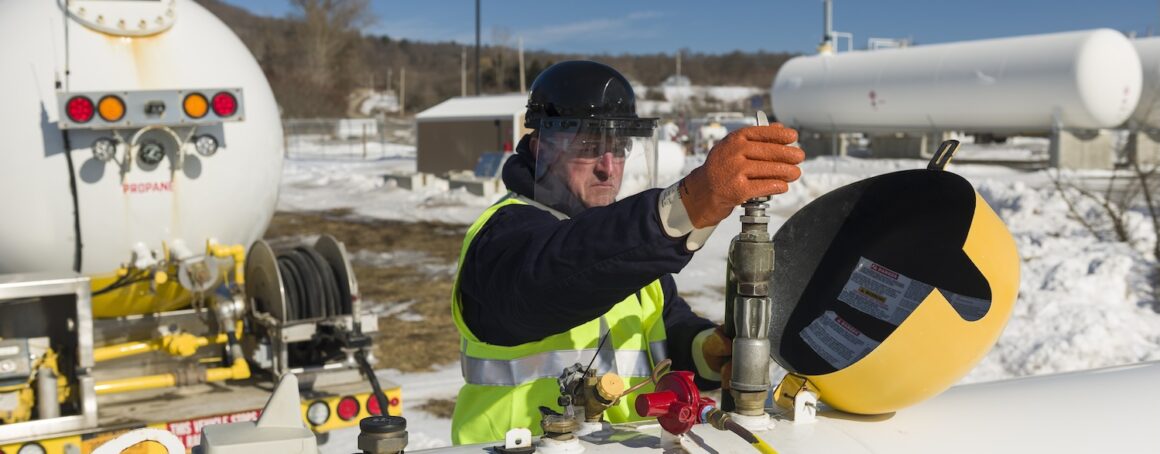
Propane supports a wide range of commercial operations, from temporary heating on construction sites to powering forklifts, restaurant equipment, agricultural systems, backup power, and fleet vehicles. Since every business uses propane differently, commercial propane tank sizes can range from portable cylinders to large-capacity tanks designed for higher fuel demand.
The right propane tank size depends on your industry, equipment, propane usage, available space, site conditions, and delivery needs. This guide compares common commercial propane tank sizes and uses, and explains what to consider when choosing a tank setup for your business.
Commercial Propane Tank Sizes and Uses
| Propane Tank Size | Approximate Capacity | Common Uses | Often Used By |
|---|---|---|---|
| 33-pound tank | 8 gallons | Propane forklifts, material-handling equipment, autogas equipment, and cylinder replacement programs | Warehouses, distribution centers, manufacturing facilities, material-handling operations, and forklift fleets |
| 100-pound tank | 25 gallons | Temporary heating, food trucks, space heaters, job site equipment, drying or curing materials, and small commercial appliances | Construction crews, food trucks, mobile food businesses, temporary job sites, and small commercial sites |
| 120-gallon tank | 96 gallons | Commercial cooking, water heating, dry-cleaning equipment, small-space heating, patio heaters, and seasonal applications | Restaurants, service businesses, small facilities, dry cleaners, workshops, and seasonal operations |
| 250-gallon tank | 200 gallons | Supplemental heating, moderate commercial propane use, job site heating, water heating, small building heat, and multiple appliances | Small businesses, workshops, commercial buildings, farms, greenhouses, and light industrial sites |
| 500-gallon tank | 400 gallons | Commercial heating, agriculture, greenhouse heating, livestock heating, backup power, multiple appliances, and higher BTU loads | Farms, restaurants, commercial buildings, larger facilities, construction sites, greenhouses, and backup power users |
| 1,000-gallon tank | 800 gallons | High-volume heating, crop drying, irrigation, agriculture, fleet fueling, dispensing, large equipment, and high-demand operations | Farms, fleets, industrial operations, large commercial facilities, agricultural operations, dispensing stations, and high-demand businesses |
These are general examples. Equipment demand, refill frequency, available space, service access, and local installation requirements can all affect the right tank size and setup. Depending on your site and usage, Superior Plus Propane may recommend a larger tank, multiple tanks, or manifolded cylinders to help meet higher fuel demand. For dimensions and additional tank specifications, visit our propane tank information page.
How To Choose the Right Commercial Propane Tank
Choosing the right propane tank involves more than matching an industry to a standard size. Commercial propane tanks generally fall into three groups:
- Small operations and portable equipment: 33- to 100-pound tanks
- Moderate propane use: 120- to 500-gallon tanks
- High-volume commercial or agricultural use: 500- to 1,000-gallon tanks
When choosing a commercial propane tank, consider:
- Propane usage: Estimate daily, weekly, and seasonal fuel demand.
- Connected equipment: Account for every propane appliance, heater, generator, vehicle, or system.
- BTU load: Higher-demand equipment may require a larger propane tank or multiple tanks.
- Operating schedule: A restaurant operating daily may use propane differently than a seasonal farm or temporary job site.
- Delivery frequency: A larger tank may reduce how often propane delivery is needed.
- Available space and site conditions: Above-ground and underground tanks require adequate installation space, delivery access, service access, and required clearances.
- Future needs: Consider whether your business may add equipment, increase capacity, or need additional propane storage later.
The right propane tank size should provide enough fuel for normal operations without creating unnecessary capacity or installation challenges. Superior Plus Propane can review your equipment, usage, site conditions, and delivery needs to recommend an appropriate tank size and setup.
Above-Ground and Underground Commercial Propane Tanks
Many commercial propane tanks are installed above ground because above-ground tanks are generally simpler to access, inspect, and service.
An underground propane tank may be considered when appearance or available surface space is a priority. However, underground propane tanks are usually more involved to install because they require underground placement, excavation, and additional site considerations.
The right choice depends on property layout, business needs, local requirements, service access, site conditions, and installation requirements. In some cases, underground tanks may not be recommended due to flooding risk, high water tables, access limitations, or other property conditions. Learn more about underground propane tank installation and considerations.
How Long Does Propane Last in a Commercial Tank?
How long propane lasts in a commercial tank depends on how quickly it is being used. Tank size and tank level are helpful indicators, but they do not tell the full story. Usage can vary based on:
- Tank capacity
- Propane usage
- Equipment demand and BTU load
- Operating hours
- Outdoor temperatures and seasonal heating needs
- Building size and insulation
- Number of connected appliances or systems
- Generator or backup power use
For example, propane may last longer in a 500-gallon tank used for supplemental heating than in the same-sized tank supporting whole-building heating, water heating, cooking equipment, generators, and multiple propane appliances.
The propane tank itself may remain in service for decades with proper installation, inspection, and maintenance. Superior Plus Propane can help review your usage and recommend the right tank size or configuration for your operation.
Automatic Propane Delivery for Businesses
For businesses with recurring propane needs, Automatic Delivery can help manage refill timing based on real usage patterns and delivery planning. By supporting a more consistent propane supply, automatic delivery can help businesses keep day-to-day operations running with fewer delivery-related disruptions.
Businesses should still monitor propane levels and let Superior Plus Propane know about significant usage changes, such as added equipment, expanded operating hours, renovations, seasonal demand changes, or new backup power needs.
Commercial Propane Tank Size FAQs
The right commercial propane tank size depends on your equipment, BTU load, operating schedule, propane usage, available space, and delivery needs. Smaller operations may use portable cylinders or a 100-gallon tank, while higher-demand businesses may need a 500-gallon tank, 1,000-gallon tank, multiple tanks, or a custom propane storage setup.
Propane forklifts commonly use 33-pound propane cylinders. These cylinders are mounted horizontally on the forklift and can be replaced as needed to support ongoing warehouse, distribution, or material-handling operations.
Restaurants may use propane tanks ranging from approximately 100 to 500 gallons, depending on cooking equipment, water heating, building heat, patio heaters, pool or spa heating, backup power needs, and operating hours.
A 500-gallon propane tank may support commercial heating or supplemental heating, but the right size depends on building size, climate, insulation, equipment load, operating hours, and whether propane also powers water heating, cooking equipment, generators, or other appliances.
Yes. Certain commercial propane tanks are designed for underground installation. An underground propane tank may be considered when appearance or available surface space is a priority, but it requires excavation, proper placement, professional installation, and appropriate access for propane delivery, inspection, and maintenance.Learn more in our underground propane tank guide.