
 For Your Home
  For Your Business
  Other Services
 Oil to Propane Conversion Made Simple
Everything You Need to Know About Switching to Propane
Converting from oil to propane can help homeowners upgrade outdated heating systems, improve energy efficiency, and enjoy the flexibility of a safe fuel source. The process involves replacing oil-fired heating equipment with high-efficiency propane appliances while installing a propane tank and fuel system designed for your home.
Superior Plus Propane makes the propane conversion process simple with expert guidance, professional installation, and dependable propane delivery.
Why Homeowners Are Converting from Oil to Propane
Many homeowners are switching from heating oil because older oil furnaces and boilers may require more maintenance and lack the efficiency of newer propane heating systems. A propane conversion can help homeowners replace aging equipment with modern systems designed for reliable performance.
Benefits of converting from oil to propane include:

Lower-emission home heating
Propane produces fewer greenhouse gas emissions and air pollutants than heating oil, helping homeowners reduce emissions while maintaining reliable home heating.

Safe, professionally installed energy
Propane storage, handling, transportation, and installation are governed by established safety codes and regulations. Propane systems should always be installed and maintained by trained, qualified professionals. Learn more about propane safety and proper propane use.

Versatile home energy
Propane can do more than heat your home. Propane can also power furnaces, boilers, water heaters, fireplaces, ovens, gas ranges, clothes dryers, generators, and outdoor appliances.

Improved efficiency
Modern propane furnaces and boilers can achieve high AFUE ratings, helping convert more fuel into usable heat and potentially improving efficiency compared with an older heating system.

Lower maintenance needs
Propane appliances typically require less maintenance than oil heating systems, which may require regular burner cleaning and fuel storage management.

More usable space
Removing an oil tank can help homeowners reclaim valuable space while reducing concerns associated with an aging tank, such as corrosion, maintenance, and potential oil leaks.
Installation requirements and costs vary based on your existing heating system, home layout, equipment choices, site conditions, and propane tank requirements.
Converting From Oil to Propane: A Straightforward Process
Every home is different, but most oil-to-propane conversions follow a similar process.

Step 1: Home Assessment
Superior Plus Propane evaluates your current heating system, home layout, and energy needs. This helps determine the right propane solution, such as a furnace, boiler, water heater, or combination of appliances.

Step 2: Oil Tank Removal or Decommissioning
Your existing oil tank may need to be removed or properly decommissioned based on local requirements. Removing an aging oil tank can help prevent future maintenance concerns and create additional space.

Step 3: Propane Tank Installation
A propane tank is selected and installed based on your property, expected propane usage, equipment needs, and safety requirements. Depending on the site, above-ground or underground propane tank options may be available. Learn more about propane tank sizes and uses.

Step 4: Propane Equipment Installation
The new propane equipment is installed and connected to the propane tank. This may include a furnace, boiler, water heater, gas lines, and other propane-powered appliances. Explore propane services.

Step 5: Safety Testing & Service Activation
Before activation, qualified technicians complete safety inspections, leak testing, and appliance startup procedures. Once installation is complete, Superior Plus Propane provides ongoing propane delivery and service.
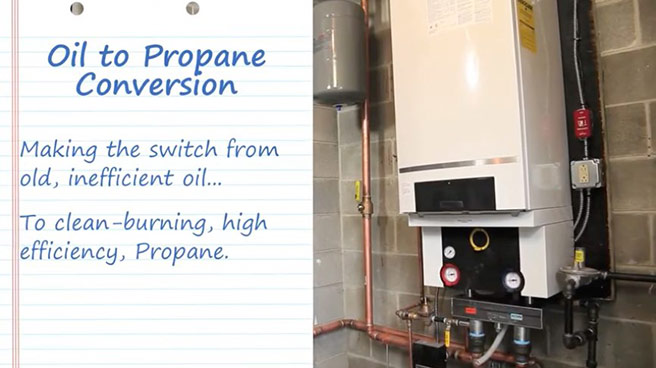
Converting from oil to propane can provide a safe, reliable, and versatile energy solution for your home. Watch the video below for an overview of what to expect during a propane installation.
What Affects the Cost of Converting from Oil to Propane?
There’s no one-size-fits-all cost for converting from oil to propane. The total investment depends on your home’s existing equipment, heating needs, property, and installation requirements.
Factors that may affect propane conversion cost include:
- Existing heating system and whether a new furnace or boiler is needed
- Oil tank removal or decommissioning
- Gas line installation requirements
- Propane tank size, placement, and installation type
- Home size and heating needs
- Additional propane appliances being installed
For even more convenience, learn how automatic propane deliveries are planned around your propane usage and local weather conditions.
Propane: Powering More Than Your Home Heating
One of the biggest advantages of converting from oil to propane is the ability to use one versatile energy source for multiple needs throughout your home.
Propane can power:

Furnaces
Efficient propane furnaces provide reliable home heating.

Boilers
Propane boilers deliver consistent heat for radiant and hydronic systems.

Water heaters
Propane water heaters provide efficient hot water and can help replace older oil-powered systems.

Fireplaces, ranges, dryers, and outdoor appliances
Propane appliances add comfort and convenience throughout your home.

Standby generators
Propane-powered generators provide reliable backup power during an outage.
Ready to Make the Switch? Choose Superior Plus Propane
Converting from oil to propane can improve your home’s comfort, efficiency, and energy options. Superior Plus Propane provides experienced installation support, local service, reliable propane delivery, and ongoing customer support.
Homeowners throughout Maine, Vermont, and New Hampshire can switch from heating oil to propane to reliable home heating while eliminating the need for an aging oil tank. Propane can also power multiple appliances, including furnaces, boilers, water heaters, fireplaces, ranges, and outdoor living equipment.
Converting From Oil to Propane FAQs
Converting from oil to propane is typically straightforward when completed by experienced professionals. The process includes evaluating your current heating system, installing and connecting your propane tank and equipment, and completing safety checks.
Many homeowners choose propane because it offers improved efficiency, fewer maintenance concerns, and the ability to power multiple propane appliances.
An old oil tank may be removed or properly decommissioned depending on local requirements. Superior Plus Propane can explain the appropriate process for your property.
Some heating systems may be adapted for propane, while others may require replacement with a propane furnace or boiler. Superior Plus Propane can help determine whether conversion or replacement is the safest and most practical option.
The timeline varies based on your existing heating system, equipment needs, propane tank installation, and overall project complexity. Superior Plus Propane can give you a more accurate timeline after assessing your home.
Yes. In addition to home heating, propane can power water heaters, fireplaces, cooking appliances, clothes dryers, standby generators, and outdoor living equipment.