
 For Your Home
  For Your Business
  Other Services
 Propane Tank Sizes and Uses
The right propane tank depends on how you use propane, which appliances are connected, how often you need fuel, and where the tank can be safely placed in compliance with local regulations. Superior Plus Propane can help customers choose the right tank setup for their home or business.
The following are tank sizes and specifications of some of our most commonly used propane cylinders and tanks for residential and small commercial applications. Propane tank dimensions and capacities may vary by manufacturer.
Propane Tank Size Comparison
Use this quick propane tank size comparison to understand common capacities, applications, and placement considerations. Exact requirements may vary by property, tank type, and local code.

20 lb. Cylinder
4.6 GAL. LPG CAPACITY
12” DIAMETER X 18” H
Best For: Propane grills, generators, patio heaters, and other outdoor equipment.
Placement: Portable. Keep upright, outdoors, and a recommended minimum of 5 feet from any structure.

33 lb. Tank
8 GAL. LPG CAPACITY
12” DIAMETER X 24” H
Best For: Liquid draws. Most commonly used to operate propane powered forklifts and other propane autogas-fueled vehicles.
Placement: Attached to the machinery it will power in the horizontal position.

100 lb. Tank
~25 GAL. LPG CAPACITY
18” DIAMETER X 48” H
Best For: Home fireplaces, cooking, dryers, barbecues, and temporary job site heat.
Placement: Keep at least 3 feet from doors or windows. Clearance varies by fill method: on-site filling requires at least 10 feet from exterior ignition sources; if not filled on site, 5 feet minimum applies.
200 lb. Tank
57 GAL. LPG CAPACITY
24” DIAMETER X 43” H
Best For: Residential applications that only need to power 1-2 small appliances.
Placement: Can be placed against a building with proper clearance and access.

120 Gallon (420 lb.) Cylinder
96 GAL. LPG CAPACITY
30’’ DIAMETER X 54.5” H
Best For: Residential uses other than primary home heating, including water heaters, fireplaces, pool heaters, and auxiliary heaters.
Placement: Can be placed against a building. Up to four cylinders can be manifolded together when additional capacity is needed.
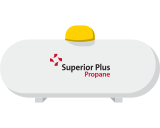
250 Gallon Tank
200 GAL. LPG CAPACITY
30” DIAMETER X 7’10” LONG
Best For: Moderate propane uses, such as a clothes dryer, fireplace, and stove—also sufficient for a heating system for smaller homes.
Placement: 10 feet from any building or property line.

325 Gallon Tank
260 GAL. LPG CAPACITY
30″ DIAMETER X 10′ LONG
Best For: Commonly used for residential and small commercial heating applications, or where a higher BTU load is required for multiple uses.
Placement: 10 feet from any building or property line.

500 Gallon Tank
400 GAL. LPG CAPACITY
37.5″ DIAMETER X 9′11″ LONG
Best For: Commonly used for residential and small commercial heating applications, or where a higher BTU load is required for multiple uses.
Placement: 10 feet from any building or property line.

1,000 Gallon Tank
800 GAL. LPG CAPACITY
41″ DIAMETER X 16′2″ LONG
Best For: Small businesses, commercial sites, and agricultural operations with high-volume propane needs or very high BTU loads.
Placement: Above-ground tanks require 25 feet from any building or property line. Underground tanks up to 2,000 gallons require 10 feet.
How Propane Tank Size and Usage Affect Delivery Frequency
Propane tank size and tank level are helpful indicators, but they do not tell the full story. Delivery frequency also depends on propane usage, outdoor temperatures, home size, thermostat settings, home and appliance efficiency, the number of people in the home, and whether propane is used for a backup generator.
For example, a standard 500-gallon tank is commonly used for residential heating and multiple propane appliances. Depending on the home, local climate, and how propane is used, estimated delivery needs may look like this:
- High-usage home: Uses propane for full-home heating, water heating, and cooking. Larger homes or homes in colder weather may need 2 to 4 or more deliveries per year.
- Moderate-usage home: Uses propane for heating and some appliances. Depending on home size and usage, these homes may need 1 to 2 deliveries per year.
- Low-usage home: Uses propane mainly for a fireplace, space heater, or occasional appliance use. These homes may need one delivery per year.
The difference becomes clearer when comparing two homes with the same tank size, climate, and tank level. Two neighbors may both have a 500-gallon propane tank at 30%, but the remaining propane may last longer in one home than the other:
- Neighbor A has four occupants, a larger home, and uses propane for home heating, water heating, and cooking. Their home may use about 3% of the tank per day, meaning the remaining propane could last up to 10 days.
- Neighbor B has two occupants, a smaller or more efficient home, and lower overall propane use. Their home may use about 1% of the tank per day, meaning the remaining propane could last about 30 days.
This is why propane tank levels do not tell the full story. A 30% tank level represents the same amount of propane in both tanks, but how long that propane lasts depends on each household’s rate of consumption.
Above Ground vs. Underground Propane Tanks
Propane tanks can be installed above ground or underground. While property layout, budget, service access, appearance preferences, and local requirements may be considered, Superior Plus Propane can evaluate your property and help determine the appropriate tank option based on installation requirements and site conditions.
Above Ground Tanks
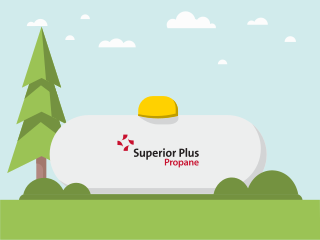

Lower Installation Considerations
May involve less excavation, depending on the site and installation requirements.

More Accessible for Service
Generally easier to access for routine service, maintenance, and visual checks.

More Placement Options
A practical choice where underground installation is not preferred or feasible, with placement based on site conditions and service access.
Underground Tanks
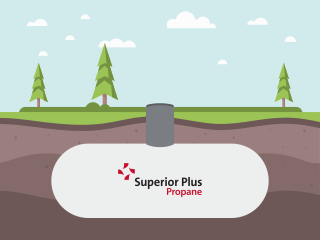
Space-Saving Placement
Helps keep more usable yard space open by placing the tank below ground.

Discreet Appearance
Can help keep propane storage less visible on the property.

Cold Weather Performance
Underground placement helps protect tanks from extreme outdoor temperatures and may support more consistent propane performance in colder climates.
Note: Underground tanks may not be suitable for every property, especially in areas with flooding risk, high water tables, or other site conditions.
Propane Tank Placement and Safety Guidelines
Propane tank placement is an important part of safe, reliable propane service. Placement requirements can vary by tank size, property conditions, and applicable codes, so customers should always work with trained propane professionals before installing or relocating a tank.
Common placement considerations include:
- Distance from buildings, doors, windows, and ignition sources
- Above ground placement and level tank positioning
- Safe access for propane delivery and service teams
- Clear access around the tank for inspections and maintenance
- Keeping tanks away from unsafe locations, including areas where vehicles may drive over or block access
- Following residential and small commercial propane safety guidance
Propane Tank FAQs
The right propane tank size depends on the appliances running on propane and their efficiency rating, your rate of consumption, and where the tank can be safely placed. Smaller tanks may support limited appliance use, while larger tanks may be needed for whole-home heating, multiple appliances, or commercial and agricultural applications.
How often your propane tank needs to be filled varies based on tank size, propane usage, outdoor temperatures, home size, appliance efficiency, the number of people in the home, and whether propane is used for a backup generator.
For example, a 500-gallon tank used for full-home heating, water heating, and cooking may need more deliveries than the same size tank used for fewer appliances or lower overall propane usage.
A propane tank’s lifespan depends on tank size, installation, maintenance, inspections, and use conditions. Refill frequency also varies based on propane usage, connected appliances, climate, and seasonal demand.
The cost to fill a tank is based on the propane price per gallon. Propane prices are either variable (fluctuating with the commodity price) or fixed if you prefer to lock in a rate for one year or longer. Aside from the variable or fixed price, the cost to fill the tank also depends on tank size. Deliver related fees such as hazmat are also factored into the cost. Contact Superior Plus Propane for help understanding your propane service options.
Superior Plus Propane does not sell, refill, or exchange 20 lb. BBQ cylinders. For cylinder refills, exchanges, or pricing, please contact your local retailer. In select areas, you may also be able to find a nearby exchange location through Pick Up Propane.

